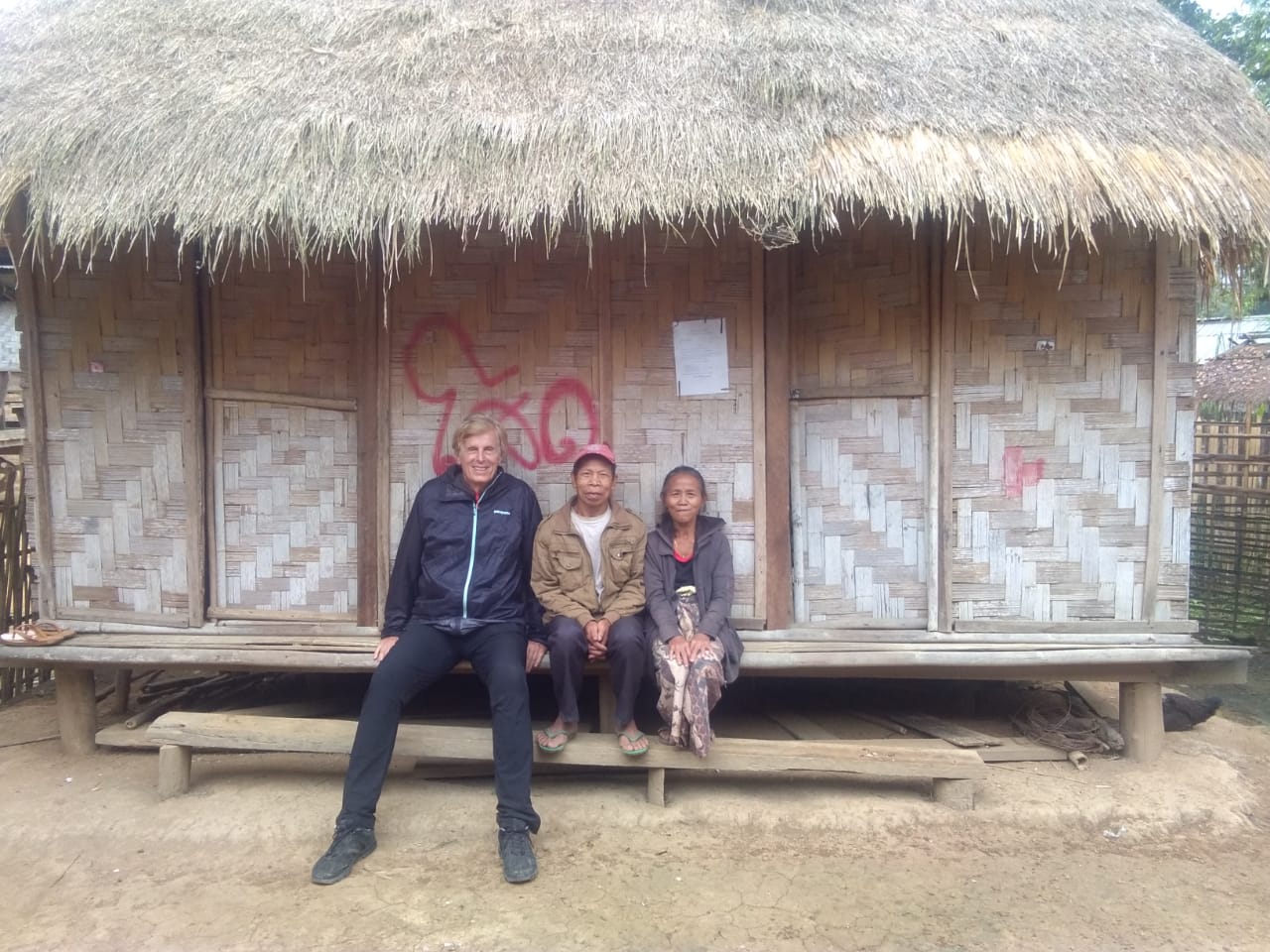
Visiting a village during a day trek gives you a brief glimpse of rural life in Laos, but staying overnight changes the experience completely. When day visitors leave and the sun drops behind the hills, the village settles into its real evening rhythm. Families return from the fields, cooking fires are lit and daily life unfolds right around you.
A village homestay offers a closer look at everyday routines, home-cooked food, local traditions and hospitality. At the same time, it helps to arrive with realistic expectations: this is a cultural experience inside a working rural community, not a hotel stay. Facilities are simple, schedules follow village life rather than a tourist timetable, and the best moments usually come from slowing down and sharing space with your hosts.
What Is a Village Homestay in Laos?
In Laos, a village homestay means staying overnight in a home managed by a local family or village. Unlike hotels, town guesthouses, or private eco-lodges, homestays are located directly inside residential communities, often in Khmu, Hmong, Akha or Lao Loum villages.
Depending on the destination, you might sleep in a space inside a family’s house or in a simple building constructed by the community specifically for overnight guests. Common areas, dining spaces, and bathrooms are typically shared with your hosts or fellow travelers.
Many village homestays operate through community-based tourism initiatives, which ensure that hospitality is organized locally and that income directly supports participating families and village funds.
What to Expect During Your Stay
Knowing what daily life looks like at a homestay removes uncertainty and helps you pack properly. While details vary by region and season, here is what most travelers can expect.
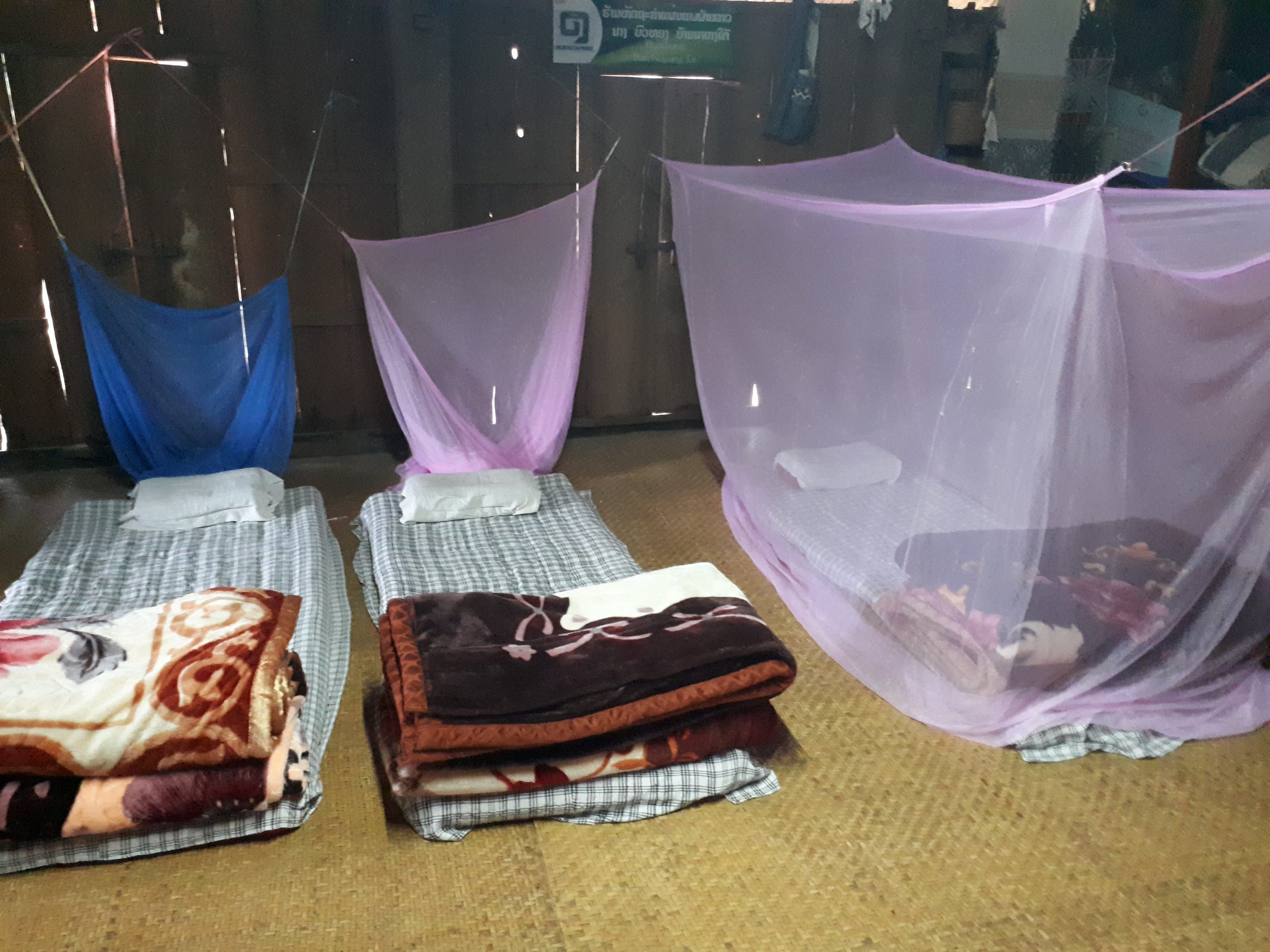
Accommodation and Sleeping Arrangements: Sleeping spaces are simple and practical. Rather than Western bed frames, you will usually sleep on a clean foam mattress or padded mat placed on the floor, complete with a pillow, warm blankets, and a mosquito net. In some homes, guests share a large open room separated by curtains or basic private rooms.
Bathrooms and Facilities: Bathrooms are typically shared and located either inside the house or in a separate small building nearby. Most villages have Western-style or squat flush toilets and basic cold-water showers or bucket baths. Hot water is rarely available in remote villages, and electricity may rely on small solar panels or limited evening hours.
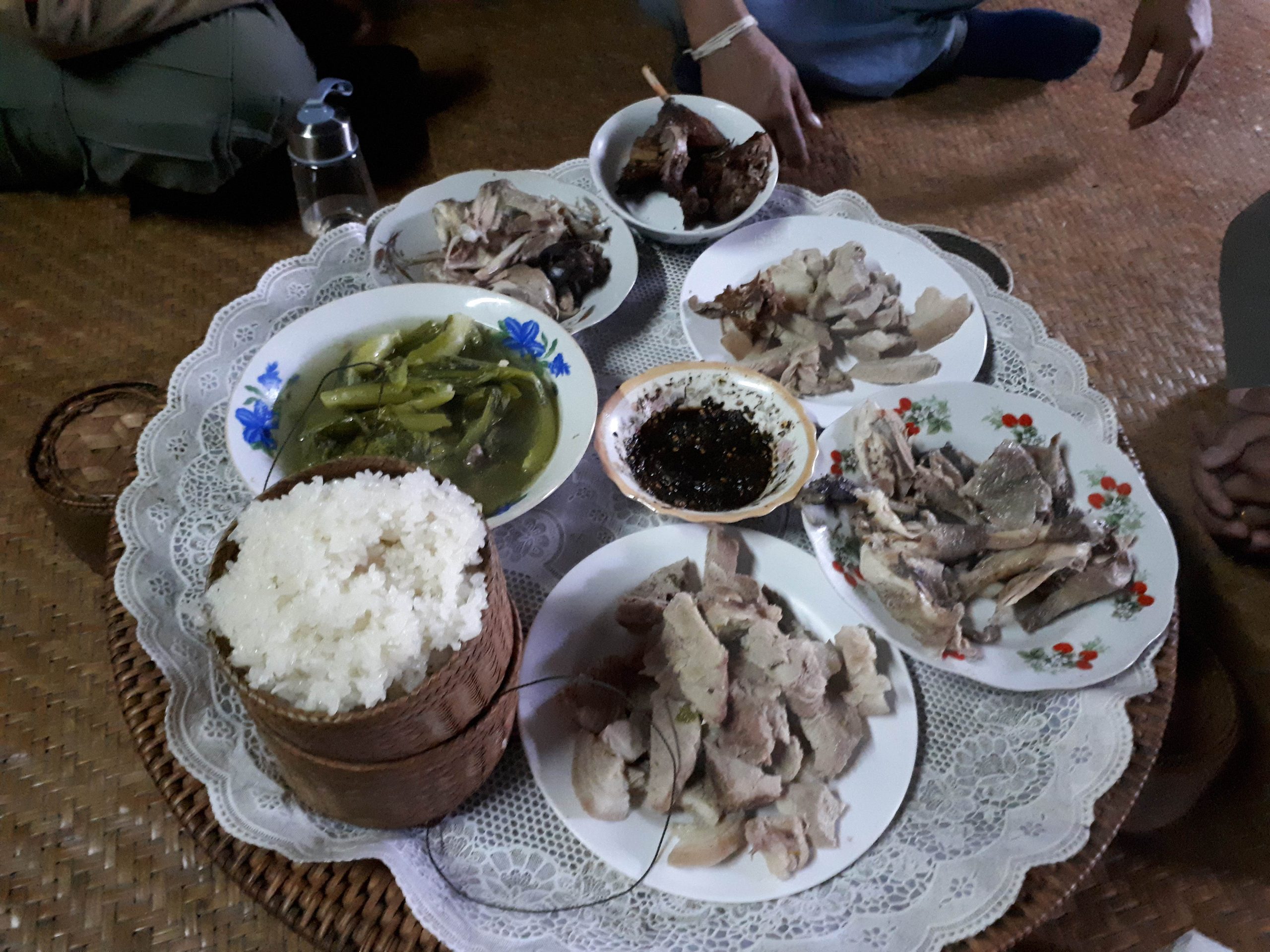
Food and Meals: Meals are cooked fresh by your host family using ingredients grown in nearby fields, gardens or gathered from the forest. Expect sticky rice, steamed vegetables, mild soups, bamboo shoots, herbs, local chili dips and occasionally chicken, river fish or egg dishes.
Communication and Language: Most host families speak Lao or their own ethnic language such as Khmu or Hmong. Local guides will help translate conversations and explain cultural context. Even without a shared language, warm smiles, gestures and a few basic Lao words like Sabaidee (hello) and Khop Jai (thank you) bridge the gap easily.
Social Interaction: Depending on the evening, you may spend time drinking herbal tea with your hosts, watching children play outside, seeing how baskets or textiles are woven or simply sitting quietly near the cooking fire. Hosts are welcoming, though they also have household chores to finish. Let interactions happen naturally without feeling pressured to fill every moment.
What Makes a Village Homestay Special?
What stays with travelers long after a trip is the human connection that comes from sharing everyday space. Instead of observing traditions from behind a camera lens, you learn about local customs directly from the people who practice them. You might see how sticky rice is steamed in woven bamboo baskets and learn which forest leaves are used for evening tea.
Sharing a meal on the floor with the host family creates a natural sense of equality and warmth. Conversations translated with a guide frequently turn to simple, universal topics such as family, farming seasons, weather and curiosity about where you come from. Watching how closely village life is tied to the surrounding forests, rivers and seasons gives you more understanding of rural Laos than guidebooks can offer.
How to Be a Good Guest in a Lao Village
Being a respectful guest does not require complicated rules. It mostly comes down to awareness, modesty and respect.
Dress Appropriately: Rural Laos is conservative. Keep shoulders and knees covered when walking around the village, visiting temples or spirit houses and even when walking to the bathroom at night.
Respect Local Home Customs: Always remove your shoes before stepping inside a home. In Lao culture, the head is considered the highest and most sacred part of the body, while the feet are the lowest. Avoid touching anyone’s head and try not to point your feet directly at people or food when sitting on the floor. Step around people rather than stepping over them.
Ask Before Taking Photographs: Always ask permission or ask your guide to check before taking photos of residents, children, elders or inside private homes. If someone looks hesitant or declines, smile and put the camera away.
Be Mindful of Noise: Villages become very quiet after sunset. Keep voices low in the evening, avoid playing loud music and respect early bedtimes.
Respect People’s Privacy: A village is also a living neighborhood. Do not wander uninvited into private bedrooms, kitchens or neighbors’ yards without being accompanied or invited.
Follow Local Guidance: Some ethnic communities have sacred areas, village gates, or household shrines with specific customs. Listen carefully to your guide or host before touching ceremonial objects or joining activities.
Buy Locally When Possible: If villagers sell handmade textiles, bamboo crafts or snacks, buying directly from the makers is a meaningful way to support household livelihoods.
Avoid Giving Money or Sweets to Children: Handing out candy, coins, or gifts directly to children can encourage begging and create inequality among families. If you would like to contribute, ask your guide or host about supporting a community fund or local school initiative instead.
What to Pack for a Village Homestay
Packing light and smart makes an overnight village stay much more comfortable. Most trekking and homestay programs provide bedding, blankets, and mosquito nets, though it is always worth confirming with your tour operator before departure. For clothing, pack lightweight long pants or knee-length shorts, breathable t-shirts, and a warm fleece or jacket, as mountain villages can get surprisingly chilly at night. Easy slip-on sandals or flip-flops are also much more convenient than laced hiking boots since you will take your shoes off every time you enter a house.
Along with your clothes, bring personal toiletries such as biodegradable soap, a toothbrush, toothpaste, hand sanitizer, a small pack of tissues or toilet paper and a quick-dry towel, insect repellent for dusk and early morning. A flashlight or headlamp is essential for navigating dark paths to the bathroom at night or during power outages, and a reusable water bottle lets you refill with boiled or filtered drinking water rather than leaving plastic waste behind. Finally, pack any regular medications, basic first-aid items, earplugs if you are a light sleeper and a fully charged power bank as charging outlets may be limited or unavailable.
Choosing a Responsible Village Homestay
Not all village visits create equal benefits for residents. When choosing a homestay experience, look beyond price alone and consider how the stay is organized.Is the homestay owned and run by local families or a rotating village group rather than an outside investor? Does the trip employ local guides, cooks, or boat drivers from the surrounding area? Does the operator explain clearly how fees support host families and broader community development funds? Are activities organized with genuine community participation rather than staged performances? Does the provider share practical cultural etiquette tips with travelers before arrival?
Choosing a well-structured community program helps ensure that your visit respects local traditions and brings real value to the people hosting you.
Be a Guest, Not Just a Visitor
A village homestay in Laos is not about finding the softest mattress or ticking another stop off an itinerary. It is an invitation to slow down, step into the local’s daily rhythm and experience rural life across the country. If you arrive with curiosity, patience and respect for local customs, even a single night in a Lao village can become a meaningful memory of your journey.
If you would like to experience a village stay, explore our FairTrek village treks and homestays, where every journey is led by local guides and directly benefits the communities. [Link]
Common Questions Before Staying in a Lao Homestay
Are village homestays comfortable? – Comfort in a homestay is about warmth, cleanliness and hospitality rather than luxury. Floor mattresses and blankets are generally cozy, though evenings can be cool in the mountains. Approaching the stay as a camping style indoor experience helps set the right expectations.
Will I have a private room? It depends on the village. Some community homestays offer small private rooms with wooden walls or curtains while others use a shared sleeping hall for guests. If privacy is important to you, ask your operator in advance what the layout looks like.
Are bathrooms shared? Yes, bathrooms are almost always shared with other guests and sometimes with the host family. Facilities are clean and functional, though basic.
Can I get vegetarian or special meals? Yes, Lao cuisine relies heavily on vegetables, herbs, mushrooms, and rice, making vegetarian and vegan meals easy to prepare. Let your guide or booking operator know about any dietary restrictions or food allergies before your trip so your hosts can plan ahead.
Will hosts speak English? In most rural villages, hosts speak little or no English. Traveling with a local guide bridges communication smoothly and learning a few basic Lao greetings always brings warm smiles.
Is it safe to stay in a village? Yes. Rural Lao villages are generally very safe, peaceful, and welcoming. Follow standard travel sense. Keep valuables secure, use a flashlight at night on uneven steps and drink only boiled, filtered or sealed water.
Can families with children stay? Many families find homestays to be a memorable experience for kids, especially when village children play together. However, because of open wooden stilt balconies, steep ladders and basic facilities, parents should consider their children’s ages and check the specific village setup.