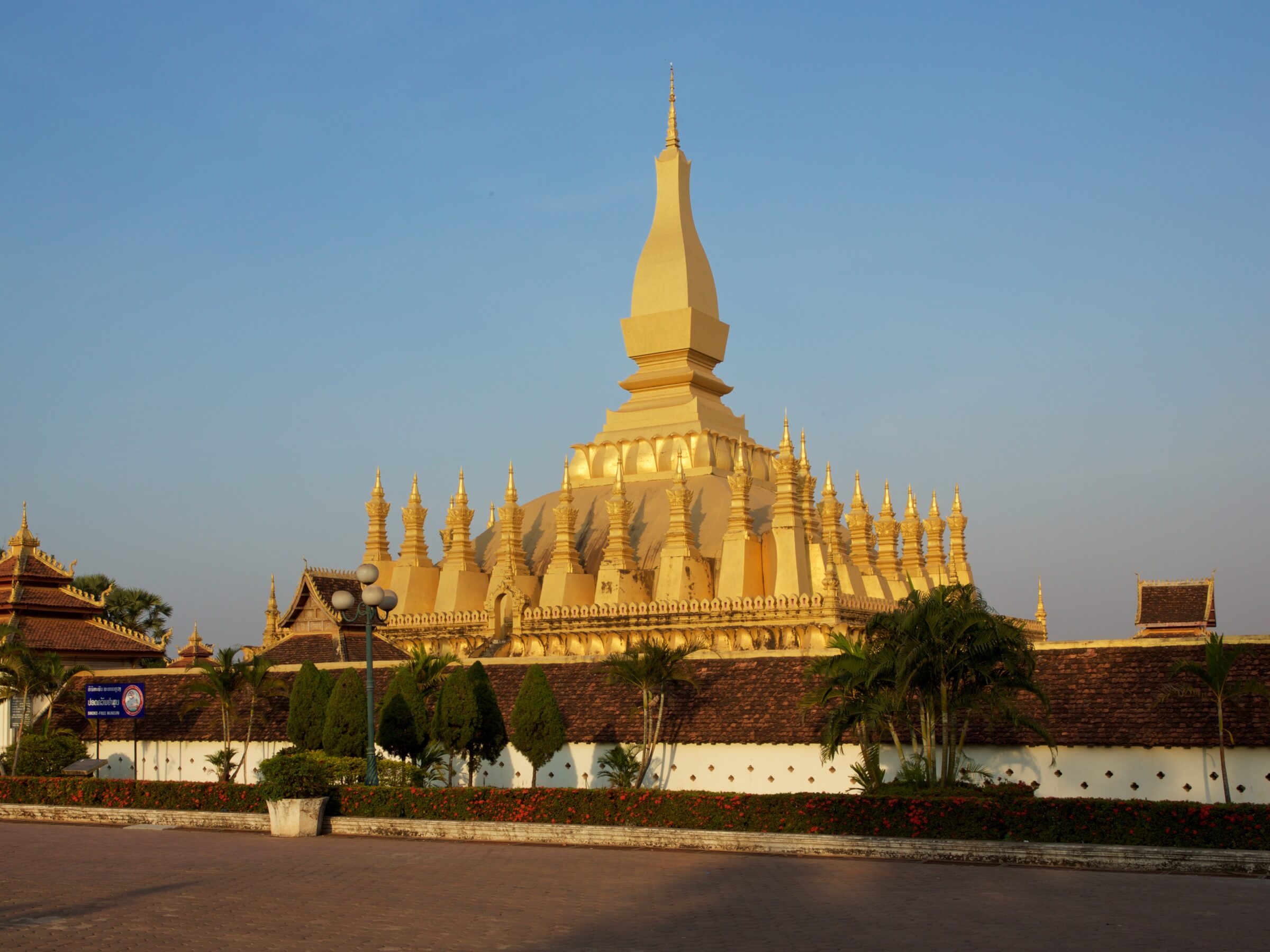
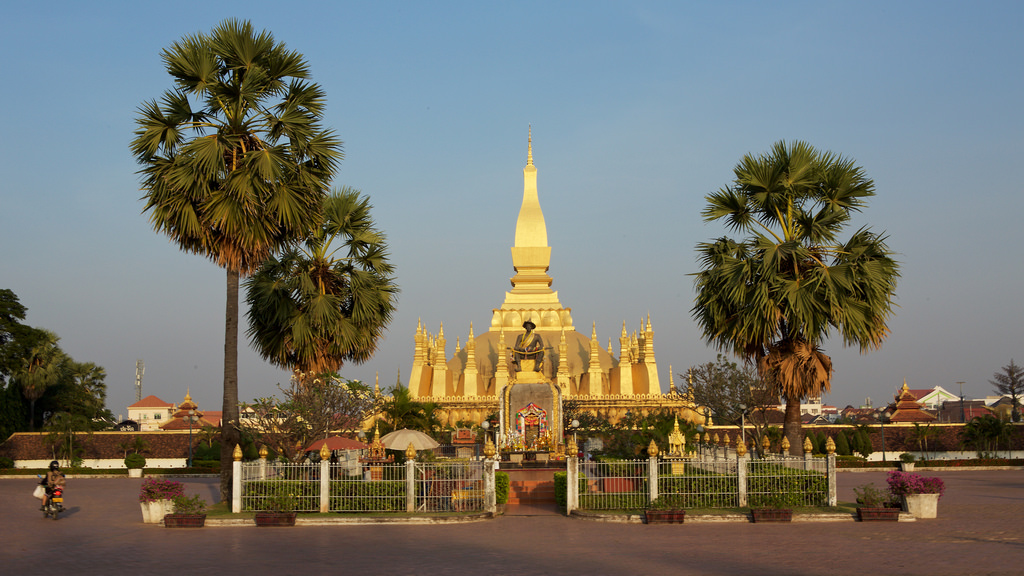
Boun That Luang (also known as the That Luang Festival) is the most significant annual festival in Laos. Rooted deeply in Theravada Buddhism, key rituals are performed to honor the Buddha and seek spiritual blessings. Lasting between three to seven days, it brings thousands of Buddhist monks, pilgrims, and visitors from across the nation to Vientiane for a blend of sacred traditions, cultural processions, and a lively trade fair.
Why is it important to Lao people?
Boun That Luang is deeply important to the Lao people as both a spiritual journey and a powerful symbol of national unity. It brings families and communities together from every province to share in traditional music, regional food, and local games while dressed in classic Lao attire. For devotees, the festival offers a meaningful way to make merit through sacred rituals like dawn alms-giving (Tak Bat), wax castle processions and evening candlelight walks around the stupa.
Why is it held at Pha That Luang?
Pha That Luang (The Great Stupa) in Vientiane is the spiritual heart of Laos. It is believed to hold a sacred relic of the Buddha, brought to the site in the 3rd century BCE. In 1566, King Setthathirath rebuilt the stupa in its grand golden form when Vientiane became the capital. Since then, it has served as the gathering place for the country’s most important religious celebrations.
When is the That Luang Festival?
The That Luang Festival takes place annually during the full moon of the twelfth lunar month in the traditional Lao calendar, which typically falls in November. Because it follows the lunar calendar, its exact dates shift slightly each year. The main celebrations take 3 to 7 days, reaching their peak on the full moon day. In 2026, the festival takes place from November 21 to 24, with the final day (November 24) marking the official full moon.
Travelers should keep two key ceremonies in mind: the Grand Morning Alms Giving which begins at dawn around 5:30 AM on the full moon day, and the Candlelight Procession which takes place at sunset around 6:00 PM to close the festival.
What happens during the That Luang Festival?
The That Luang Festival is an event of sacred rituals and vibrant national celebrations. Among its many traditions, the most famous event is the Wax Castle Procession (Phasat Pheung).
The Wax Castle Procession (Phasat Pheung)
A wax castle is a detailed, tower-like structure crafted from banana stems, bamboo, and carved yellow beeswax flowers, often shaped like a multi-tiered temple. These structures represent sacred offerings to make merit, honor the Buddha, and express gratitude for good health and prosperity.
The procession traditionally begins at Wat Si Muang before making its way toward Pha That Luang. As the parade moves through the streets, thousands of participants dress in elegant traditional Lao attire, playing instruments, singing, and dancing.
Upon reaching Pha That Luang, devotees carry their wax castles around the stupa three times in a clockwise direction. Walking three times holds deep Buddhist significance, representing respect for the Three Jewels: the Buddha (the enlightened teacher), the Dharma (his teachings), and the Sangha (the monastic community). After completing the three circuits, the wax castles are presented as sacred offerings at the base of the stupa.
In Lao Buddhist tradition, making merit brings spiritual peace, cleanses past karma, and invites blessings, health, and prosperity for the future. Families prepare alms, flowers, and candles to offer to the monastic community. The Wax Castle (Phasat Pheung) itself serves as a visual symbol of this devotion as its fleeting beauty represents the impermanence of life, while its yellow beeswax and lotus-like carvings honor the wisdom of the Lord Buddha.
What can travelers expect at the That Luang Festival?
While the sacred rituals are the heart of the festival, the surrounding event is a massive national fair. Expect large, vibrant crowds as thousands of locals and travelers gather around Pha That Luang. The atmosphere is warm, festive, and welcoming, filled with the aroma of street food, the sound of traditional music, and the bright lights of evening festivities.
Rows of food stalls serve local treats while merchants and artisans from across the country sell handmade Lao silk textiles, silver jewelry, bamboo crafts, and regional agricultural goods.
As night falls, the atmosphere transforms into a lively national carnival. Visitors can watch traditional dance performances, catch live concerts by popular Lao bands, enjoy fairground rides, or watch the Tikhy (similar to hockey) match. After dark, the golden stupa glows against the night sky, creating a stunning backdrop for an evening walk.
Can tourists participate in the That Luang Festival?
Tourists and foreign visitors are warmly welcomed to attend and experience the That Luang Festival. While it is a deeply sacred event for the local community, visitors can actively join in key traditions like the evening candlelight procession or giving morning alms to monks. Foreigners can also watch and photograph the Wax Castle Procession which is typically organized by local families, villages, or community groups.
To ensure a respectful experience, visitors should keep a few important guidelines in mind:
- Dress Modestly: Cover your shoulders and knees. Women are expected to wear a traditional Lao skirt or long pants/skirt, along with a shoulder sash if joining religious ceremonies.
- Respectful Photography: Photography is allowed, but keep a respectful distance from monks and devotees during prayers. Avoid using flash during quiet rituals.
- Etiquette at Ceremonies: Stand or sit behind active worshippers during rituals so you do not block their offerings or prayers. Remove your shoes before entering temple spaces or stepping onto ritual carpets.
Experiencing the Heart of Laos
The That Luang Festival is more than an annual holiday. From walking around the golden stupa to trying street food at the trade fair and watching the vibrant parade, the festival reveals the faith, history and warmth of the Lao people. If you visit Vientiane in November, stepping into this sacred celebration will easily be one of the highlights of your trip.
Connect with our team at Tiger Trail Travel to start planning your custom festival itinerary, local guided tours, and seamless transport across Laos.